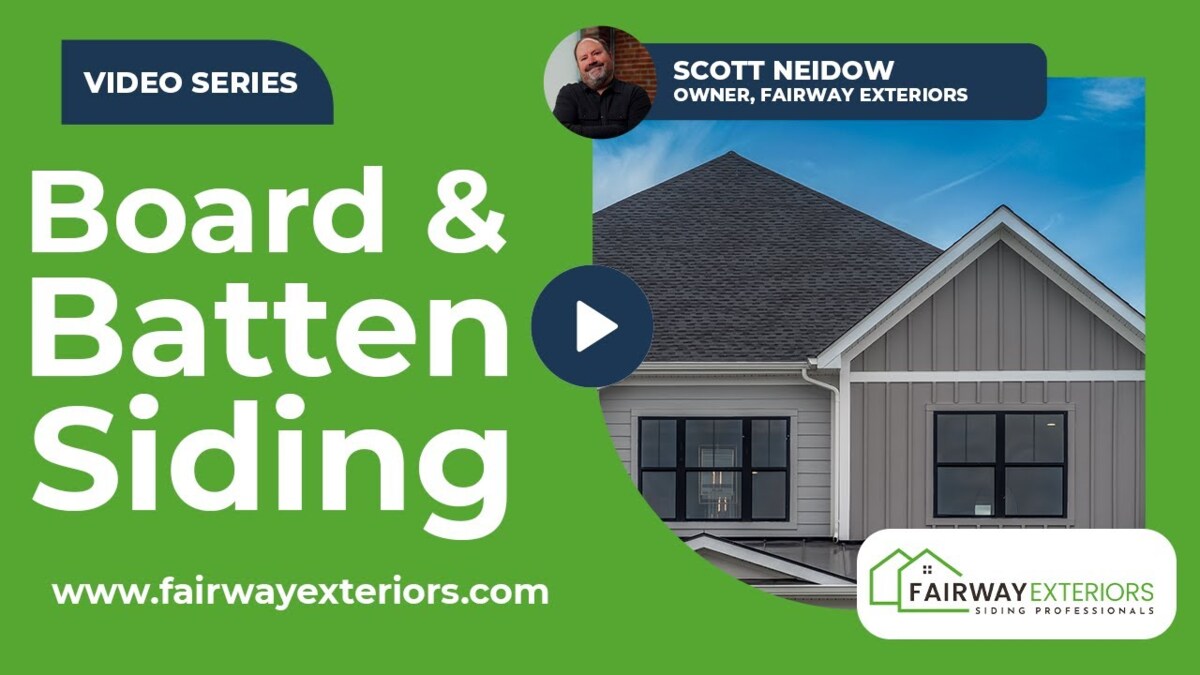
Board and batten siding refers to a vertical panel system where the main surface is formed by large sheets and the seams are covered with narrow battens. This style is common on homes built with older wood materials and is often replaced with James Hardie products for better durability.
When this vertical pattern needs to be updated, the work begins by identifying the existing panels, confirming their condition, and preparing the wall for new James Hardie panels and battens.
Understanding What Homeowners Describe as “Panel and Trim”
When someone points out a flat panel with trim pieces running across it, they are often describing the vertical board and batten look. The board is the 4×10 panel. The batten is the trim strip that sits over the seams.
Homeowners frequently do not know the technical name. They just know the pattern. When we hear the words “panel and trim,” it usually tells us they are referring to vertical board and batten.
Pro Tip: If you are unsure what you have, photos of your siding help us confirm whether it is board and batten.
What James Hardie Vertical Board and Batten Siding Includes
James Hardie vertical board and batten uses 4×10 fiber cement sheets. These come in smooth, Cedarmill, and stucco finishes. Once the panels are installed, battens are added to complete the vertical pattern.
If your wood siding has rotted, there is the James Hardie option that replaces that same general look. Many homeowners in Johnson County already have this style and often think they want to return to it when replacing their current material.
How We Install James Hardie Board and Batten Siding
Below are the steps we follow. These steps reflect the exact sequence from real projects and address issues found during removal and replacement.
1. Remove Existing Battens and Trim
We start by taking off the battens and trim from your current siding. This exposes the panel underneath so we can see its condition.
2. Fix Any Wood Rot
If the underlying material shows rot, we repair it. The siding must have a sound base before anything new is installed.
3. Leave the Existing Panel When Possible
We try to leave the existing panel in place because removing it can cause hundreds of nail pops inside your home. Keeping that panel helps avoid unnecessary interior damage and gives us a flat surface that can take a nail.
4. Install Commercial-Grade House Wrap
We wrap the home using a commercial-grade product. The wrap is brought tight across the surface so the new siding can be installed over a protected layer.
5. Tape All Seams Airtight and Watertight
Every seam in the house wrap is taped, so the surface is sealed before the James Hardie panels go up.
6. Install the 4×10 James Hardie Fiber Cement Panels
We place the large 4×10 sheets across the wall. These panels form the board portion of the board and batten.
7. Install Battens Vertically at 36 Inches
Battens are added vertically at about 36 inches. These trim strips complete the appearance and cover the seams.
8. Install Battens on Horizontal Seams
Battens are also installed across any horizontal seams where two panels meet.
Key Takeaway: These steps create the true board and batten pattern. The panel is the board. The trim is the batten. Both are required to complete the look.
Need expert help planning a board and batten upgrade with James Hardie? Contact Fairway Exteriors for a free consultation.
Appearance and Cost Factors Homeowners Should Know
Board and batten can give a very modern farmhouse look. Many Johnson County homeowners already have this on their homes and want to return to the same general style using James Hardie materials.
This pattern does add a significant premium. There is more waste and more labor because of the cuts, trim installation, and batten spacing. This is why homeowners often choose board and batten for the front, then use horizontal lap on the sides or back. The transcript notes this as a common choice.
Pro Tip: To manage cost, many homeowners keep the vertical board and batten on the most visible areas and use lap siding elsewhere.
Ready to Replace Your Board and Batten Siding?
If you describe “panel siding with trim,” you are likely referring to board and batten. We use the James Hardie system to replace rotted wood and install a durable vertical pattern.
Contact Fairway Exteriors for a free consultation. We can review your current siding, confirm the style, and walk you through the replacement process from start to finish.